This July, I decided it had been years since I had properly dedicated myself to reading. Since graduating from college and university, I somehow found myself with an absurd amount of free time — so naturally, I decided to see what I could do with it.
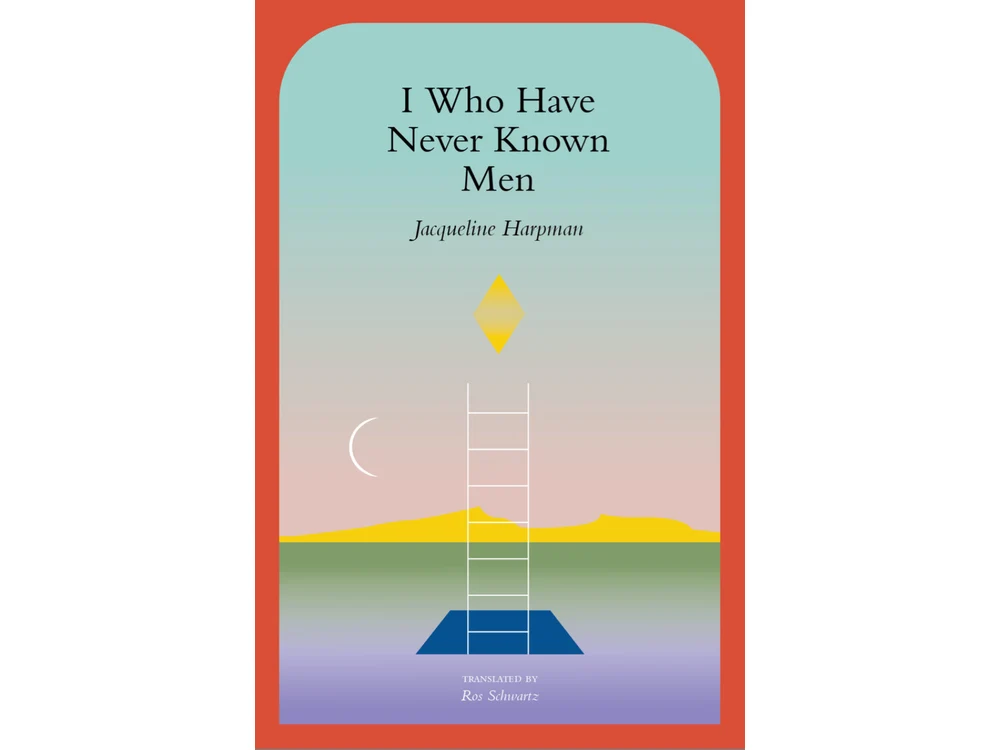
One of the books I picked up was I Who Have Never Known Men by Jacqueline Harpman.
And honestly, the premise alone was enough to get me interested.
Forty women are being held underground in a bunker. They don't know why they're there, who put them there or what is happening outside. The youngest girl among them has never known life beyond the bunker — or, really, much of the world at all.
Even the narrator doesn't have a name.
I initially assumed this was going to be one of those feminist novels where the central question is essentially: What if women didn't need men?
And I was ready for it.
I thought I was about to read some dystopian reminder that women are perfectly capable of building societies, running countries and generally surviving without the patriarchal structures we've been surrounded by for centuries.
Instead, I got something much stranger.
And much more existential.
The Girl Who Knows Nothing
One of the most interesting things about I Who Have Never Known Men is that the narrator doesn't enter the story with the same knowledge we do.
She has no normal childhood memories. She doesn't understand relationships the way the other women do. She doesn't understand men. She doesn't understand the world outside the bunker.
And because she has never experienced these things, she asks questions that most of us would never think to ask.
I'll admit that, at first, I found her kind of annoying.
She's curious, but she's also extremely frustrated that the older women won't tell her everything she wants to know — particularly when it comes to relationships, sex and men.
I understood why she was frustrated, but after a while, I found myself thinking, girl, we get it.
Thankfully, as she grows older, that frustration begins to evolve into something much more interesting.
Her curiosity becomes less about men and more about understanding the world around her.
My Favourite Part
One of my favourite details in the novel involves something that sounds incredibly boring:
time.
The women don't have a normal clock telling them when it is morning, afternoon or midnight.
So the narrator creates her own way of measuring it.
She uses her heartbeat to estimate seconds and minutes and begins piecing together the passage of time through the women's routines.
I loved this.
There's something so clever about watching someone recreate an ordinary part of human life from almost nothing.
We don't normally think about how strange it is that we know what time it is. We look at our phones, check a clock or glance at the sky.
For her, none of that exists.
And suddenly, something as ordinary as knowing whether it's morning becomes an accomplishment.
The Escape
Without giving anything away, there is a point where the women begin seriously considering how they might get out.
And this was the section where the book completely grabbed me.
I was actually reading it at the gym, sitting on the edge of my exercise bike seat, and somehow managed to stay completely focused without music playing.
If you know me, that's saying something.
The tension builds slowly, which makes the eventual payoff feel even more intense.
I'm deliberately not going to tell you what happens next.
Go read it.
Where I Struggled
My biggest issue with the book was the ending.
Not because it was necessarily bad — I actually think the ambiguity fits the novel — but because I personally have started becoming a little tired of books that leave absolutely everything open to interpretation.
I want some answers.
I don't need an author to explain every single mystery, but I do want to feel like I've been given something substantial to take away from the ending.
With this one, I finished the book and immediately thought:
...Okay. So that's it?
At the same time, I can't deny that the ambiguity is part of what makes the novel so interesting to discuss.
There are questions you're probably going to leave the novel asking yourself, and I suspect that is exactly what Harpman intended.
What I Took From It
Despite my issues with the ending, I Who Have Never Known Men is a four-star read for me.
What I expected to be a book about women existing without men turned out to be much more interested in something else:
What happens when everything you've ever known is taken away from you?
The book made me think about how much of our understanding of life comes from things we barely notice.
We know what a clock is. We know what families look like. We know what relationships are. We know the feeling of crisp morning air. We know what it's like to plant flowers. We know these things because we've experienced them.
The narrator doesn't have that luxury.
And I think that's ultimately what stayed with me after finishing it.
It made ordinary life feel a lot less ordinary.
The people we know. The places we complain about. The routines we find boring. The things we see every day without really looking at them.
We spend so much time wanting something different from our lives that sometimes we forget how much of our current life is actually a privilege.
I Who Have Never Known Men gave me many things to question about life, but I think that was the point.
So, if you're looking for a dystopian novel that will give you a straightforward explanation of what happened, tie every mystery together and send you neatly on your way, this probably isn't it.
But if you're looking for something strange, quiet, unsettling and philosophical enough to make you stare at the ceiling after finishing it?
Go give it a read.